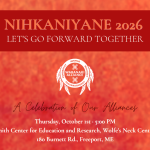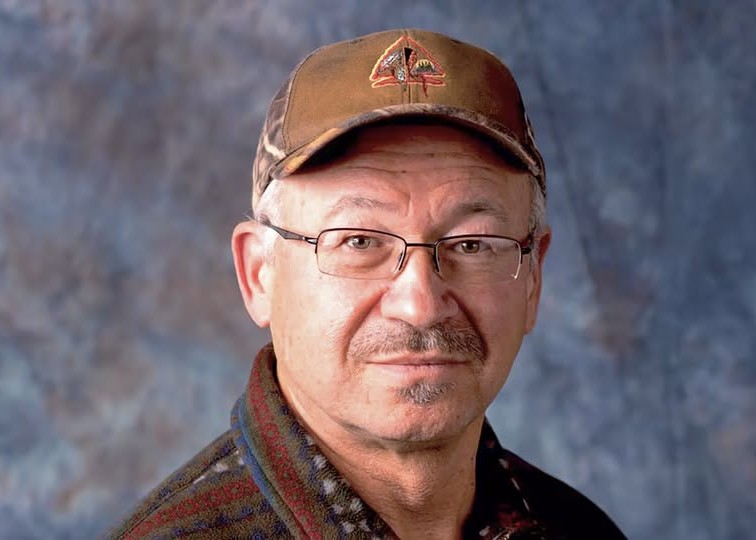
The Honorable Donald Soctomah is one of six individuals honored by the Wabanaki Alliance at the 2026 Nihkaniyane event on October 1 in Freeport and one of two honorees chosen by the Wabanaki Youth Policy Initiative.
Soctomah, a citizen of the Passamaquoddy Tribe, is a Wabanaki historian and author and a teacher, filmmaker, lecturer and storyteller. He presently serves as the Tribal Historic Preservation Officer for the Passamaquoddy communities of Sipayik and Motahkomikuk and received a presidential appointment to the board of the Roosevelt Campobello International Park Commission. He earned a bachelor’s degree in forestry and received an honorary doctorate degree from the University of Maine system.
The young people of the Wabanaki Policy Youth Initiative particularly want to highlight Soctomah’s eight years of service as the Passamaquoddy tribal representative in the Maine Legislature, from 1999-2002 and from 2006-2010.
Soctomah considers his bill approved in 2000 to change offensive place names — notably the ‘sq***’ word — to be “really a major piece of legislation” — crediting then-Penobscot Rep. Donna Loring with helping him convince skeptical lawmakers the legislation was needed to bring respect to Wabanaki people “and to create an understanding from the non-tribal population, about the tribal population.”
“It is about basic human decency and respect for one’s fellow citizens,” he wrote in a spring 2000 Wabanaki legislative update. “Our women — grandmothers, mothers and daughters — are all entitled to protection against basic human rights violations, such as the use of demoralizing language. The driving force behind this bill is hundreds of native women, who are continually offended by the use of this slang word.”
Other legislative accomplishments include:
- Securing lifetime fishing and hunting for tribal citizens;
- Ensuring that fines issued to a non-tribal person by Wabanaki police went to the tribes instead of the state;
- Protecting Wabanaki grave sites and archaeological sites;
- Co-sponsoring Loring’s landmark 2001 bill requiring Wabanaki history to be taught in all Maine K-12 schools.
He also assisted tribal efforts to develop a casino — ultimately unsuccessful — in Maine.
“I made sure I put at least six pieces of legislation in every year,” he said.
In 2009, Soctomah highlighted the significance of a one-sentence addition to House Rule 525 adding the names of tribal representatives to the House chamber’s roster. Sponsored by Reps. John Martin (D-Eagle Lake) and Peggy Pendleton (D-Scarborough), the addition of the names enabled tribal representatives to express their opinions about matters before the Legislature, though their votes are still not official. “Today is a monumental step,” Soctomah told fellow lawmakers at that time. “We are no longer invisible.”
Outside the chamber he added: “I’m hoping that when young native children see the name of the tribal representatives up there, it gives them the same hope.”
As the official tribal forester for 15 years, Soctomah helped tribal members secure jobs in the logging industry through a “forest enterprise” initiative involving the purchase of 10 skidders to support a full tribal logging operation. “We harvested about 10,000 cords to 12,000 cords at the time” he recalled in a 2022 oral history interview conducted by Wabanaki REACH.
That eventually led to the tribal loggers becoming independent contractors operating their own businesses.
In his current position as tribal preservation officer, Soctomah has collaborated with tribal language keepers and historians on a number of projects, including the first compilation of Passamaquoddy traditional tribal music on CD released in the spring of 2004 under the title, “Songs of the Passamaquoddy.”
An interactive learning CD created in 2005 — “Landscapes, Legends & Language of the Passamaquoddy People” — includes maps showing the historic range and movements of the tribe along with historic place names, many of them known only to older tribal members. In the research phase, Soctomah interviewed many Passamaquoddy elders, who shared memories of key locations in stories that create a rich learning experience for both children and adults.
He is the author of an ongoing history of the Passamaquoddy Tribe, painstakingly compiled from old newspaper clippings and tribal archives:
- “Save the Land for the Children,” (1800-1850)
- “Let Me Live as My Ancestors Had,” (1850-1890)
- “Passamaquoddy at the Turn of the Century,” (1890-1920)
- “Hard Times at Passamaquoddy” (1921-1950).
He is co-author of three children’s books: “Remember Me: Tomah Joseph’s Gift to Franklin Roosevelt”; “Tihtiyas and Jean”; and “The Canoe Maker.”
In a 2015 interview, when asked about being the first Wabanaki person to be awarded the Constance H. Carlson Prize by the Maine Humanities Council for his “exemplary contributions to public humanities in Maine,” Soctomah summed up his many varied accomplishments with these words: “I’m just doing my job. I’m just doing what needs to be done.”
In a 2022 oral history interview with Wabanaki REACH, Soctomah says the heart of his life’s work is being mindful of “struggles that the grandparents went through to get us where we are today. And we’re still doing the same struggles that they were doing … about control over our own destiny.”
Return to the Nihkaniyane: Let’s Go Forward Together post to read more about the other 2026 honorees.