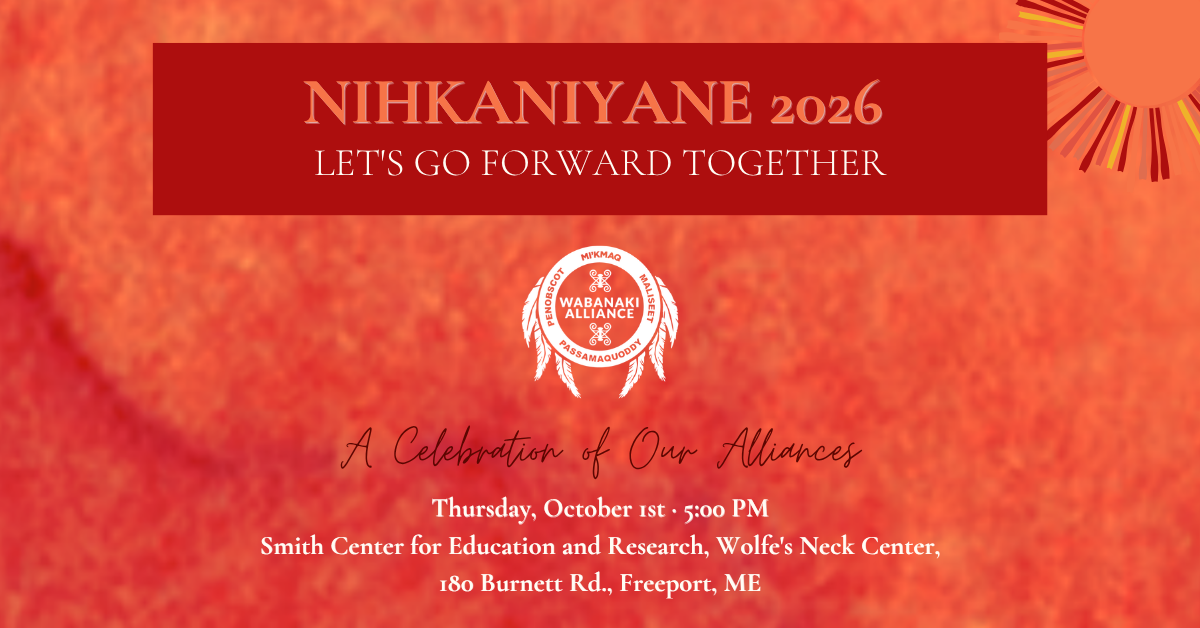
The Wabanaki Alliance will host the fourth annual Nihkaniyane: Let’s Go Forward Together on Thursday, October 1, at Wolfe’s Neck in Freeport to celebrate progress, partnership, and the continued fight for Wabanaki sovereignty and justice. Honorees include the Honorable Donald Soctomah (Passamaquoddy Tribe), the Honorable Donna Loring (Penobscot Nation), the Honorable Richard Silliboy (Mi’kmaq Nation), Chief Clarissa Sabattis (Houlton Band of Maliseet Indians), Chief Sheila McCormack (Mi’kmaq Nation), and Dr. Darren Ranco (Penobscot Nation). (Read more about the honorees here.)
The Wabanaki Alliance formed in 2020 when the Houlton Band of Maliseet Indians, Mi’kmaq Nation, Passamaquoddy Tribe, and Penobscot Nation joined together to work to improve upon the 1980 Maine Indian Claims Settlement Act (MISCA) and educate the public on tribal histories and communities.
In just these past few years, we have accomplished so much; none of it would have been possible without your steadfast support. From the early days of building our coalition to tracking and recording critical votes in the Maine legislature, your dedication has sustained us.
Earlier this spring, we hosted historic candidate forums in Houlton, Presque Isle and on Indian Island for those running for highest offices in our homelands called Maine. While we are heartened by the commitments and dialogue we heard, we take nothing for granted. Challenges lie ahead, but we remain incredibly hopeful about the powerful opportunities on the horizon.
Before the hard work of the upcoming legislative season starts again, please join us to celebrate our shared progress. Enjoy a lovely evening dedicated to honoring Wabanaki sovereignty, building community, and sustaining the momentum we’ve created together.
As always, we appreciate your unwavering partnership, passion, and commitment to this work. We look forward to gathering with you! Wabanaki citizens attend for free!
Click on the button below to purchase your ticket. And stay tuned for more information about our honorees. For more information, contact events@wabanakialliance.com.
2026 Honorees
 Darren Ranco, chair of Native American Programs and professor of anthropology at the University of Maine, holds a doctorate in Anthropology from Harvard University and Master of Studies in Environmental Law from Vermont Law School. As a citizen of the Penobscot Nation, his work as at the University of Maine emphasizes environmental justice, land return, and using his position as an interdisciplinary scholar to help the Wabanaki people. He focuses on rematriation, land return, and making it environmentally safe for Wabanaki people to continue traditional sustenance foodways practices. Ranco grew up in Orono, with his dad (a Penobscot Nation citizen) having moved there before Ranco was born. He was mentored by Ted Mitchell and, along with his older brothers, encouraged to attend college. Ranco benefitted from the Mellen Foundation initiative that funded his study as a minority student at Dartmouth College at a time when there was significant Indigenous presence at Dartmouth. It was there he became fascinated with anthropology. He went on to get his PhD at Harvard in this field.
Read more about Darren Ranco >>
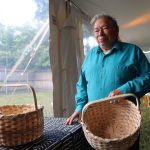 The Honorable Richard Silliboy, a founding member of the Wabanaki Alliance and served as Vice Chief of the Mi’kmaq Nation for more than 11 years. Silliboy has always been willing to step up and lead to protect and sustain Mi’kmaq and Wabanaki cultural traditions and to improve the economic health and social well-being of all Wabanaki citizens. While serving as Vice Chief for 11.5 years, Silliboy held leadership roles on as many as 13 different boards and committees — the Abbe Museum, Katahdin Woods and Waters Visitors Center, Wabanaki Community Foundation, Wabanaki Commission on Land and Stewardship, etc. “I didn’t make a lot of baskets during that time,” he told us with a chuckle. He continues to serve on Pine Tree Legal and the Permanent Commission on the Status of Racial, Indigenous, and Tribal Populations, an independent, nonpartisan body with 17 seats that was established in 2019 by Maine law “to advance racial equity and tribal sovereignty by bridging communities and state government.”
Read more about Richard Silliboy >>
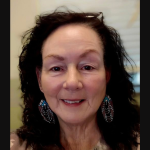 Chief Sheila McCormack of the Mi’kmaq Nation is leads a life of dedicated service to her community and all the Wabanaki Nations. Her work has supported Mi’kmaq land return, economic development, and environmental stewardship—all through a collaborative teamwork approach. Chief McCormack has served the Mi’kmaq Nation in multiple roles over the past decades, including as Tribal Councilor, and now as Chief of the Mi’kmaq Nation. She is currently serving a four-year term from 2025 to 2029. This summer, Chief McCormack led the collaborative effort to secure a 3,400-acre parcel of forest, fields, and wetlands for the Mi’kmaq Nation. The land, known as Mesgilg Maqamigew or “big land,” is now the largest contiguous tract of land owned and stewarded by the Mi’kmaq Nation. As Brett Ciccotelli and Shannon Hill write, “With Mesglig Maqamigew, the Nation’s citizens now have the chance to listen, understand, and work with the land. They can care for it to encourage moose to stay, and fiddleheads and brown ash to take root and grow.”
Read more about Sheila McCormack >>
 Chief Clarissa Sabattis of the Houlton Band of Maliseet Indians is just the fifth chief in the tribe’s 45-year history as a federally-recognized tribe. She was re-elected in May 2025 to a third four-year term as tribal chief, a position she has held since 2017. She credits her father, Clair Sabbattis, who was the tribe’s third chief from 1985-1997, with instilling core values she has done her best to cultivate over the years. “I have always had so much respect for my father, especially during times when there were hard decisions to be made,” she said in 2017. “He had always taught me to be proactive, treat others with respect, and stand up for my beliefs. What he has passed on to me through seeing his tireless devotion to our tribe as a leader was pride in my people, and our culture, and determination to ensure our existence for generations to come.”
Read more about Clarissa Sabattis >>
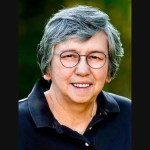 The Honorable Donna Loring is one of two honorees chosen by the Wabanaki Policy Youth Initiative. Loring was raised by her grandmother on Indian Island. From early in her life, she served the country, the State of Maine, and the Penobscot Nation in ways that have broken barriers and advanced the stature of Wabanaki people. While still a teenager, she joined the Women’s Army Corps and served as a Communications Specialist at Long Binh Army Base, north of Saigon. She was one of few women to serve in a combat zone in Vietnam, and to earn a combat patch. After graduating from the Maine Criminal Justice Academy, from 1984 to 1990 she served as Police Chief of the Penobscot Nation, becoming the first woman to serve as Police Chief in the State of Maine. During those years she completed her bachelor’s degree at UMaine in Political Science. In 1992 she became the first woman Director of Security at Bowdoin College, holding that position for five years.
Read more about Donna Loring >>
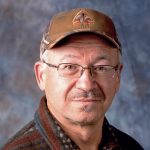 The Honorable Donald Soctomah is one of two honorees chosen by the Wabanaki Youth Policy Initiative. Soctomah, a citizen of the Passamaquoddy Tribe, is a Wabanaki historian and author and a teacher, filmmaker, lecturer and storyteller. He presently serves as the Tribal Historic Preservation Officer for the Passamaquoddy communities of Sipayik and Motahkomikuk and received a presidential appointment to the board of the Roosevelt Campobello International Park Commission. He earned a bachelor’s degree in forestry and received an honorary doctorate degree from the University of Maine system. The young people of the Wabanaki Policy Youth Initiative particularly want to highlight Soctomah’s eight years of service as the Passamaquoddy tribal representative in the Maine Legislature, from 1999-2002 and from 2006-2010.
Read more about Donald Soctomah >>